

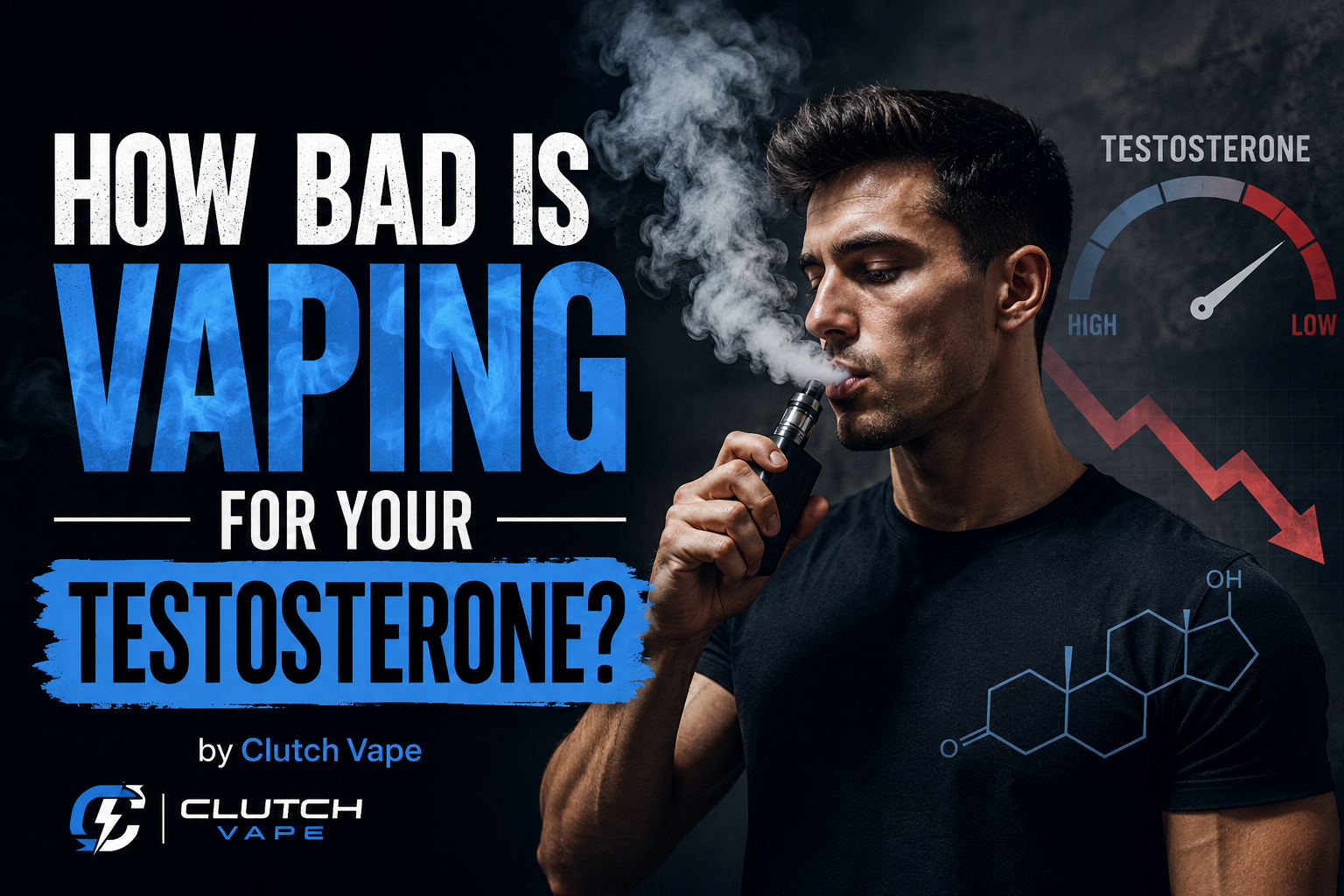
How Bad Is Vaping for Your Testosterone? by Clutch Vape
Testosterone plays a major role in the male body. It affects muscle growth, energy levels, mood, sex drive, fertility, bone density, and overall health. Because testosterone is such an important hormone, many people wonder whether vaping can negatively affect it. A common question today is: How bad is vaping for your testosterone?
The answer is not completely simple. Research on vaping and testosterone is still developing, but current studies suggest that nicotine and some chemicals found in vape products may potentially influence hormone levels, reproductive health, and overall testosterone production. However, vaping may still expose users to fewer harmful chemicals than traditional smoking because it does not involve burning tobacco.
In this complete guide by Clutch Vape, we’ll explore what testosterone does, how vaping may affect it, what science currently says, and how users can make more informed choices.
What Is Testosterone?
Testosterone is the primary male sex hormone, although women also produce small amounts of it. It is mainly produced in the testes in men and helps regulate many important body functions.
Testosterone Helps With:
- Muscle growth and strength
- Energy levels
- Bone density
- Sex drive
- Mood and confidence
- Sperm production
- Fat distribution
Healthy testosterone levels are important for physical and mental well-being. When testosterone drops too low, people may experience fatigue, reduced motivation, low libido, muscle loss, and mood changes.
Because of these effects, many users are concerned about whether vaping could interfere with hormone production.
Does Vaping Affect Testosterone?
Research suggests that vaping may potentially affect testosterone levels, especially because most vape devices contain nicotine. Nicotine can influence hormone regulation, blood circulation, and stress responses within the body.
However, scientists are still studying the long-term hormonal effects of vaping because e-cigarettes are relatively new compared to traditional cigarettes.
The impact may depend on:
- Nicotine strength
- Frequency of vaping
- Overall health
- Diet and sleep quality
- Age and genetics
- Use of disposable or refillable devices
While some studies suggest possible negative effects, the evidence is not yet fully conclusive.
How Nicotine May Influence Testosterone
Nicotine is one of the main substances linked to potential hormonal changes in vapers. It stimulates the nervous system and affects several biological processes in the body.
Possible Ways Nicotine May Affect Testosterone:
1. Increased Stress Hormones
Nicotine can increase cortisol, commonly called the stress hormone. Elevated cortisol levels over time may interfere with testosterone production because the body prioritizes stress management over hormone balance.
Long-term stress is already associated with lower testosterone levels, and nicotine may contribute to that imbalance in some users.
2. Blood Flow Changes
Healthy testosterone function and reproductive health depend heavily on proper blood circulation. Nicotine can constrict blood vessels, reducing blood flow throughout the body.
Poor circulation may negatively affect:
- Hormone delivery
- Reproductive health
- Physical performance
- Sexual health
This is one reason some health experts raise concerns about long-term nicotine use.
3. Sleep Disruption
Good sleep is critical for testosterone production. Most testosterone is produced during deep sleep cycles, especially during REM sleep.
Nicotine may disrupt sleep by:
- Increasing alertness
- Raising heart rate
- Causing restlessness
- Making it harder to reach deep sleep
Poor sleep quality over time may contribute to lower testosterone levels naturally.
Does Vaping Lower Testosterone Directly?
There is currently no clear scientific agreement proving that vaping directly causes major testosterone reduction in all users. However, some studies suggest nicotine exposure and oxidative stress may influence hormone production.
Researchers are still investigating:
- Long-term vape use
- Nicotine salts vs. traditional nicotine
- Chemical exposure from flavored vape liquids
- Hormonal changes over time
The biggest concern is usually not vaping alone, but excessive nicotine intake combined with poor lifestyle habits.
Vaping vs. Smoking for Testosterone
Traditional smoking has been studied for decades and is strongly linked to various health risks. Smoking exposes the body to thousands of toxic chemicals created through tobacco combustion.
Vaping differs because it heats liquid instead of burning tobacco.
Cigarettes Contain:
- Tar
- Carbon monoxide
- Combustion toxins
- Thousands of harmful chemicals
Vapes Usually Contain:
- Nicotine
- Vegetable glycerin (VG)
- Propylene glycol (PG)
- Flavorings
Because vaping avoids combustion, many experts consider it less harmful than smoking overall. However, “less harmful” does not mean harmless.
When it comes to testosterone, smoking is generally considered more damaging because of its greater toxic chemical exposure.
Can Nicotine-Free Vaping Affect Testosterone?
Nicotine-free vaping may reduce some of the concerns related to testosterone because nicotine itself is one of the main substances associated with hormonal stress responses.
However, even nicotine-free vape products may still expose users to:
- Flavoring chemicals
- Heated aerosol particles
- Oxidative stress
Research on nicotine-free vaping and testosterone remains very limited.
Other Health Factors That Lower Testosterone More Than Vaping
Many people focus heavily on vaping while ignoring larger lifestyle factors that may have a stronger impact on testosterone levels.
Common Testosterone Killers Include:
- Poor sleep
- Obesity
- Chronic stress
- Heavy alcohol use
- Lack of exercise
- Poor nutrition
- Drug abuse
- Overtraining
In many cases, these lifestyle habits may affect testosterone more significantly than moderate vaping alone.
Signs of Low Testosterone
If someone is worried about hormone levels, it’s important to recognize common symptoms of low testosterone.
Possible Symptoms Include:
- Fatigue
- Low sex drive
- Reduced muscle mass
- Mood swings
- Difficulty concentrating
- Weight gain
- Reduced strength
- Poor recovery after exercise
These symptoms can also be caused by many other health conditions, so proper medical evaluation is important.
Is Vaping Worse for Young People?
Younger individuals may be more sensitive to nicotine because their bodies and brains are still developing. Hormonal systems during adolescence are especially important for growth and reproductive development.
This is one reason health organizations strongly discourage vaping among teenagers and young adults.
For developing bodies, heavy nicotine exposure may create more concerns related to:
- Hormone regulation
- Brain development
- Focus and attention
- Addiction risk
Vaping products are intended only for adult users.
Can Quitting Nicotine Improve Hormone Health?
Many users report feeling improvements in:
- Energy
- Sleep quality
- Physical performance
- Mood
after reducing or quitting nicotine.
Improved sleep, exercise, hydration, and nutrition can naturally support healthier testosterone production.
Healthy habits that may help hormone balance include:
- Strength training
- Quality sleep
- Balanced diet
- Stress reduction
- Hydration
- Regular physical activity
Lifestyle changes often make the biggest difference over time.
What Science Still Doesn’t Know?
One important thing to understand is that vaping research is still evolving. Cigarettes have been studied for decades, while modern vaping products are relatively new.
Scientists are still studying:
- Long-term hormonal effects
- Flavoring chemical exposure
- Nicotine salt formulations
- Heavy vape usage patterns
- Reproductive health outcomes
Because of this, no one can honestly claim vaping has zero effect on testosterone.
At the same time, current evidence also does not clearly prove that moderate vaping automatically causes severe testosterone loss in every user.
How to Vape More Responsibly?
For adults who choose to vape, responsible use matters.
Tips for Smarter Vaping:
- Avoid excessive nicotine strengths
- Stay hydrated
- Prioritize good sleep
- Exercise regularly
- Buy authentic vape products
- Avoid counterfeit devices
- Consider lowering nicotine gradually
Making healthier lifestyle choices alongside vaping may reduce some overall health risks.
Final Verdict: How Bad Is Vaping for Your Testosterone?
So, how bad is vaping for your testosterone?
Current evidence suggests that vaping—especially nicotine vaping—may potentially influence testosterone and hormone health through stress responses, sleep disruption, and circulation effects. However, research is still ongoing, and the long-term hormonal impact is not fully understood.
Compared to traditional smoking, vaping is generally considered less harmful because it avoids tobacco combustion and many toxic chemicals found in cigarettes. Still, vaping is not risk-free.
The biggest factors affecting testosterone often include:
- Sleep quality
- Diet
- Exercise
- Stress levels
- Overall lifestyle habits
For adult users, moderation, responsible nicotine use, and healthier daily habits are likely more important than vaping alone when it comes to maintaining hormone health.
At Clutch Vape, informed decisions and responsible vaping remain the key to a better overall experience.
FAQs
Does vaping lower testosterone?
Research suggests nicotine may potentially affect hormone balance, but there is no clear evidence proving vaping severely lowers testosterone in all users.
Is vaping better than smoking for testosterone?
Vaping is generally considered less harmful than smoking because it avoids combustion and many toxic cigarette chemicals.
Can nicotine affect hormones?
Yes, nicotine may influence stress hormones, circulation, and sleep quality, which can indirectly affect testosterone production.
Does nicotine-free vaping affect testosterone?
There is limited research on nicotine-free vaping and testosterone, but removing nicotine may reduce some hormonal concerns.
How can I support healthy testosterone levels?
Good sleep, exercise, stress management, hydration, and proper nutrition are among the most important factors for healthy testosterone production.
Read more
Is Vuse Go a Nicotine Vape? by Clutch Vapes
Yes — Vuse Go is a nicotine vape. Most Vuse Go devices contain nicotine in the form of nicotine salt e-liquid, designed for adult users who want a smoother and more satisfying vaping experi...
Read more
Does Vaping Lower Cortisol? – By Clutch Vape
Stress is one of the biggest reasons many adults turn to nicotine products, including vaping. A common question people ask is: Does vaping lower cortisol? The answer is more complicated than a simp...
Read more
Leave a comment
This site is protected by hCaptcha and the hCaptcha Privacy Policy and Terms of Service apply.