
Article: PG/VG Ratio Explained: What It Means and How to Choose (2026 Guide)

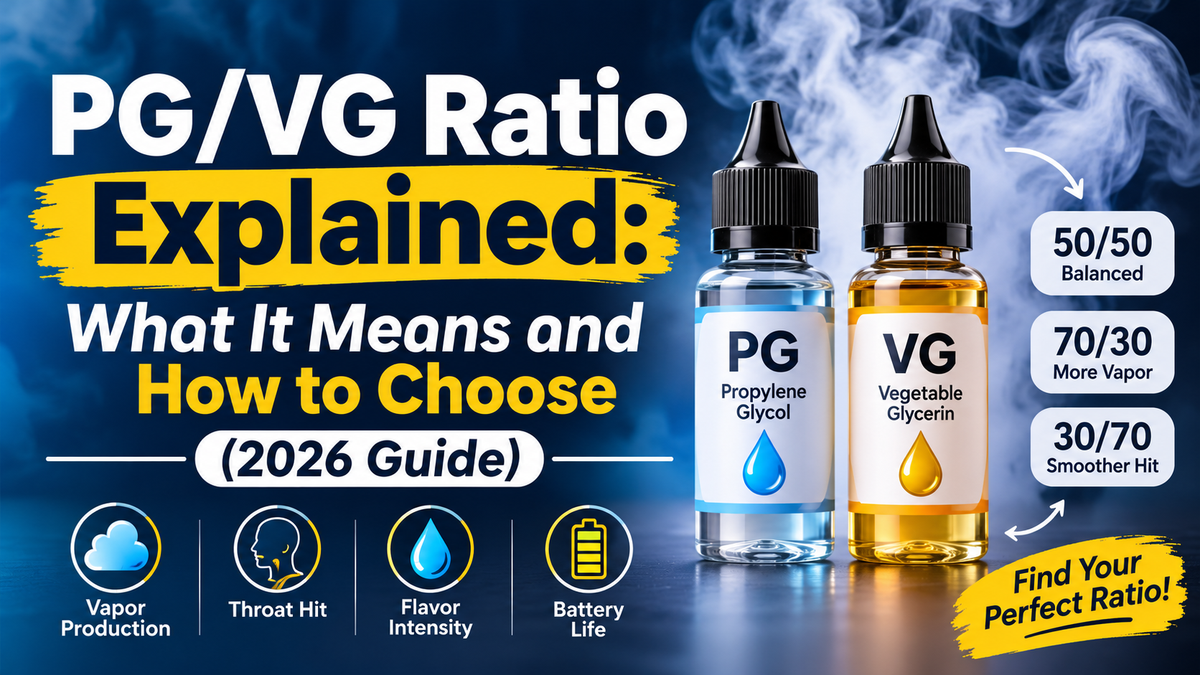
PG/VG Ratio Explained: What It Means and How to Choose (2026 Guide)
What Are PG and VG?
Both are common base liquids that make up most of an e-liquid, alongside nicotine and flavouring.
Propylene glycol (PG)
PG is a thin, clear liquid. It's used as a carrier in many products, including foods and cosmetics.
- Thinner, so it wicks quickly through the coil
- Carries flavour well, so tastes come across sharper
- Gives a stronger throat hit
- Produces less visible vapour
Vegetable glycerin (VG)
VG is a thicker, slightly sweet liquid made from plant oils.
- Thicker, so it wicks more slowly
- Produces denser vapour
- Feels smoother and softer on the throat
- Can slightly dull flavour compared with PG
A note on safety: PG and VG are used in foods and other everyday products, but that doesn't mean inhaling them is risk-free. Vaping products aren't harmless, and nicotine is addictive. If you don't smoke, don't vape.
What Does PG/VG Mean on a Label?
The ratio shows the share of PG and VG in the base liquid. A 50/50 liquid is half PG and half VG. A 70/30 liquid is 70% VG and 30% PG in many bottles, but conventions differ: some brands list PG first and others VG first. If it isn't clear, check the label or ask the retailer.
Nicotine and flavouring take up a small share of the bottle, so the ratio describes the base, not the whole liquid.
Common Ratios and What They Do
|
Ratio (PG/VG) |
Throat hit |
Vapour |
Flavour |
Typical use |
|---|---|---|---|---|
|
High PG (for example 70/30) |
Stronger |
Light |
Sharp, pronounced |
Low-power pods and some disposables |
|
Balanced (50/50) |
Medium |
Medium |
Balanced |
The most versatile ratio |
|
High VG (for example 30/70) |
Soft |
Dense |
Softer, rounder |
Higher-power devices and larger tanks |
|
Max VG (for example 0/100 or near it) |
Very soft |
Very dense |
Muted |
Specialised high-power setups |
These are general patterns. The exact feel also depends on nicotine type, strength, power and airflow.
Why Device Power Matters Most
The ratio and the device have to work together, because thick liquid needs more heat and a faster-wicking coil to vaporize properly.
- Low-power devices (pods, many disposables): these work best with thinner, higher-PG liquid. Thick VG-heavy liquid can wick too slowly, leading to weak vapour, gurgling or dry hits.
- Higher-power devices: these have bigger coils and more airflow, which handle thick, high-VG liquid well and produce large clouds.
If you use a closed pod or a disposable, the manufacturer has already matched the liquid to the device. If you use an open pod, check the device's recommended range before buying e-liquid. Our guide to closed vs open pod systems explains the difference.
PG/VG and Nicotine Type
Nicotine salts are typically paired with a higher share of PG, because salts suit low-power devices and PG carries flavour well in them. Freebase liquids are often made with more VG and used in higher-power devices. These are common patterns rather than rules. See our guides to freebase vs nicotine salt and the best nicotine salt e-liquids.
Canada caps nicotine at 20 mg/mL for all vaping products, whatever the base ratio.
How the Ratio Affects Your Experience
Flavour
Higher PG tends to taste sharper and more defined. Higher VG tends to taste softer and rounder. If a flavour seems muted, the ratio may be part of the reason. For more on how flavour works in Canada, see our guide to the best vape juice flavours in Canada.
Throat hit
PG gives more of a throat hit and VG gives less. If a vape feels harsh, a higher-VG option may feel gentler, as long as your device can handle it. Throat hit also depends on nicotine strength, so check our guide to the best nicotine strength for beginners.
Vapour production
More VG means denser vapour. More PG means lighter vapour.
Coil life and wicking
Thick liquids can gunk up coils over time, and thin liquids can leak more easily. A ratio suited to your device keeps the wick supplied and the coil healthy.
Signs the Ratio Doesn't Suit Your Device
- Weak vapour or dry hits with a thick, high-VG liquid in a low-power device. The wick isn't getting enough liquid.
- Gurgling or spitting. Liquid may be flooding the coil.
- Leaking, especially with very thin liquid in a pod that isn't designed for it.
- Burnt taste. This often means the coil isn't saturated. See our guide on why a vape tastes burnt or stops working.
- Dull flavour, which sometimes means too much VG for the device.
How to Choose a PG/VG Ratio
- Start with your device. Check the manufacturer's recommended range.
- If you use a pod or low-power device, choose a balanced or higher-PG liquid.
- If you use a higher-power device, a higher-VG liquid is usually a better match.
- Think about what you prefer. A stronger throat hit points toward more PG, while smoother and denser vapour points toward more VG.
- Change one thing at a time. If you switch ratio, keep strength and device settings the same so you can tell what changed.
- Buy a small bottle first if you're trying a new ratio.
If you're new to pod systems, our beginner starter kit guide covers the basics.
What About Disposables and Closed Pods?
With a disposable or closed pod, the ratio is chosen for you. It's still worth knowing, because it helps explain why one device feels smoother or sharper than another, and why you shouldn't try to modify or refill a sealed device. Our guides to the best disposable vapes in Canada and pod vapes vs disposables cover how to compare them.
Allergies and Sensitivities
Some people notice irritation, a dry mouth or throat, or other discomfort when vaping. Whether PG, VG, nicotine, flavouring or something else is the cause isn't always clear. If you notice symptoms you're concerned about, stop using the product and speak to a doctor or pharmacist.
Storage and Safety
- Keep e-liquid, pods and devices away from children and pets. Liquid nicotine can be harmful if swallowed or spilled on skin.
- Store at room temperature, away from heat and direct sunlight, with the cap closed.
- Don't refill closed pods or modify devices.
- Dispose of used pods and devices at a battery or electronics drop-off. Programs vary by province, and some regions, such as Quebec, have dedicated vape collection through Call2Recycle.
Buying in Canada: What to Check
- Age: The minimum age to buy vaping products is 18 or 19 depending on your province.
- Nicotine cap: Federally, 20 mg/mL for vaping products.
- Excise stamps: Packaged vaping products sold in the Canadian duty-paid market must carry a vaping excise stamp, including those sold online.
- Flavours: Rules vary by province, and federal rules restrict flavour promotion.
- Labelling: Products must carry Health Canada nicotine warnings.
Buy from a retailer that verifies age and sells stamped, properly labelled products. At Clutch Vape you can order online with shipping across Canada, or visit us in Toronto or Mississauga and our team can help you match a liquid to your device.
Frequently Asked Questions
What does PG/VG mean?
PG is propylene glycol and VG is vegetable glycerin, the two base liquids in most e-liquids. The ratio shows the balance between them.
What's the best PG/VG ratio for a pod vape?
Low-power pods generally work best with balanced or higher-PG liquid. Check your device's recommendations.
Is 50/50 a good ratio?
It's the most versatile. It balances flavour, throat hit and vapour and works in a wide range of devices.
What's the difference between high PG and high VG?
High PG is thinner with a stronger throat hit, sharper flavour and lighter vapour. High VG is thicker with a softer feel and denser vapour.
Can I use high VG in a pod?
Only if the device is designed for it. In many low-power pods, thick liquid can cause weak vapour, gurgling or dry hits.
Does PG/VG affect nicotine strength?
Not directly. Strength is set by the nicotine concentration, which is capped at 20 mg/mL in Canada. But the ratio changes throat hit, which affects how strong a vape feels.
Why does my vape taste muted?
It could be flavour fatigue, a ratio that's too thick for the device, a low battery or a worn coil. Try a different flavour, check your device and see our troubleshooting guide.
Is vaping safer than smoking?
Health Canada says that for adults who have tried approved methods and are still smoking, switching completely to vaping nicotine is less harmful than continuing to smoke. It is not harmless, nicotine is addictive, and vaping products aren't approved as a quit-smoking aid. If you don't smoke, don't vape.
The Bottom Line
PG gives a sharper flavour and stronger throat hit with lighter vapour, and VG gives a smoother feel and denser vapour. The right ratio mostly depends on your device: low-power pods and many disposables prefer balanced or higher-PG liquids, while higher-power devices handle high-VG liquids. If your vape is giving weak vapour, gurgling or dry hits, the ratio is one of the first things to check.
Visit our Toronto or Mississauga locations or browse online, and our team will help you find the right match for your device.
Clutch Vape sells products intended for adults of legal age only. Nicotine is addictive. Vaping products are not approved in Canada as a quit-smoking aid. This article is general information, not medical advice. Product details may vary, so check the specific product before purchasing. Check current rules in your province before purchasing.
Read more
Best Nicotine Salt E-Liquids in Canada: What to Look For (2026 Buyer's Guide)
What Is a Nicotine Salt E-Liquid? A nicotine salt e-liquid uses nicotine bound to an acid, commonly benzoic acid, which lowers the pH and makes the vapour feel smoother than freebase at the same st...
Read more
Leave a comment
This site is protected by hCaptcha and the hCaptcha Privacy Policy and Terms of Service apply.