

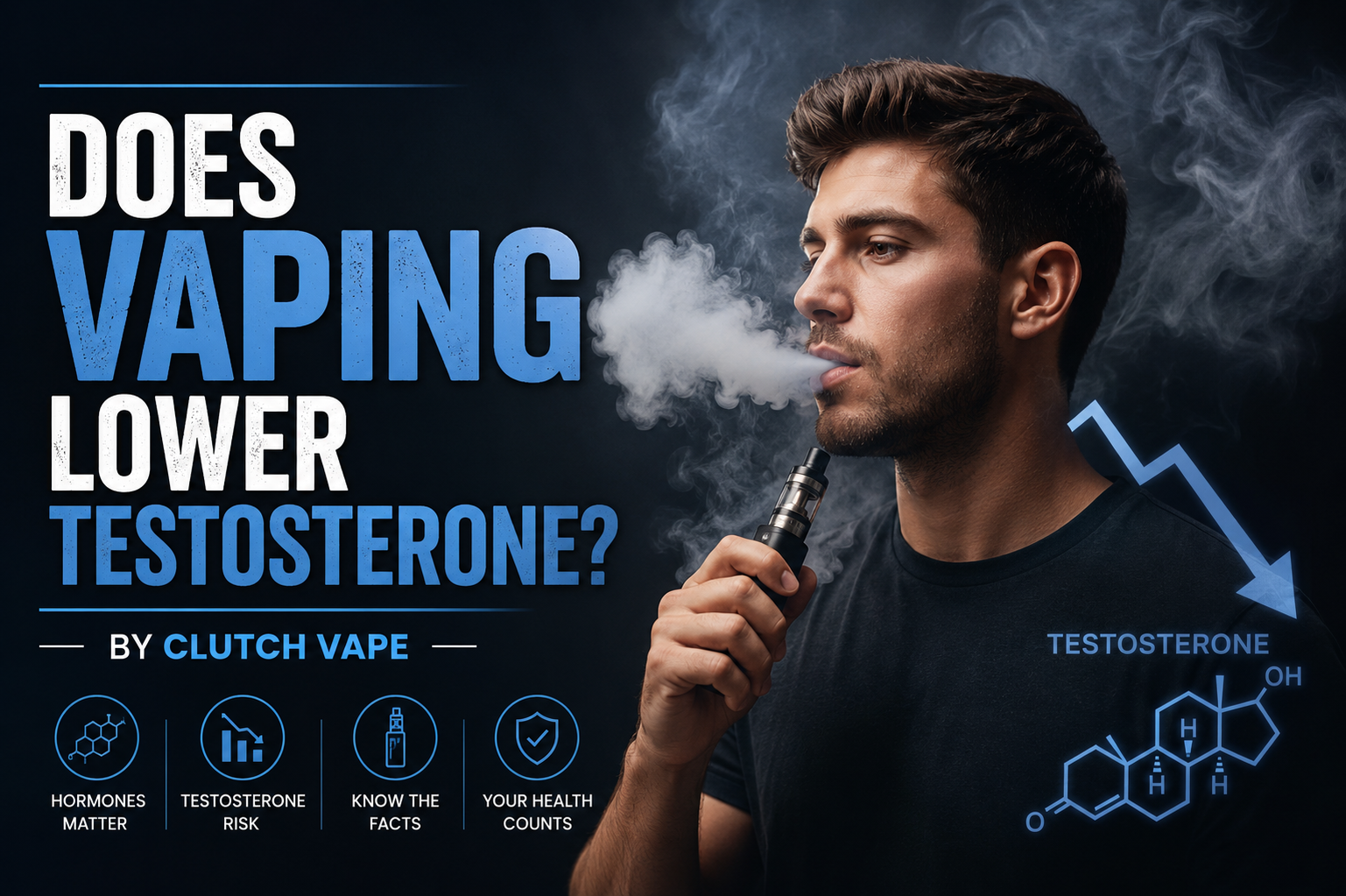
Does Vaping Lower Testosterone? BY Clutch Vape
Testosterone is one of the most important hormones in the male body. It plays a major role in muscle growth, energy levels, mood, sex drive, fertility, bone strength, and overall physical performance. Because of this, many people wonder: Does vaping lower testosterone?
The short answer is that research is still ongoing, and there is no clear evidence proving that vaping directly causes major testosterone loss in healthy adults. However, some studies suggest that nicotine and certain chemicals found in vape products may affect hormone balance, blood circulation, stress response, and reproductive health over time.
In this article by Clutch Vape, we will explore the relationship between vaping and testosterone, what current research says, and whether vaping may influence male hormones and overall health.
Understanding Testosterone
Testosterone is a hormone mainly produced in the testicles in men and in smaller amounts in women. It is responsible for many important body functions, including:
- Muscle development
- Fat distribution
- Bone density
- Libido and sexual health
- Sperm production
- Mood and motivation
- Energy levels
Healthy testosterone levels are important for both physical and mental well-being. When testosterone drops too low, people may experience fatigue, reduced muscle mass, mood changes, low sex drive, and reduced athletic performance.
Because lifestyle choices can affect hormones, many people are now asking whether vaping may influence testosterone levels.
What Happens When You Vape?
Vaping works by heating e-liquid into vapor using a battery-powered device. Most vape liquids contain:
- Nicotine
- Propylene glycol (PG)
- Vegetable glycerin (VG)
- Flavorings
When inhaled, nicotine enters the bloodstream quickly and stimulates the nervous system. This can temporarily increase alertness and dopamine release, which is one reason nicotine products feel satisfying to users.
However, nicotine also affects blood vessels, stress hormones, heart rate, and circulation. These effects are why researchers are studying whether vaping could indirectly influence testosterone and reproductive health.
Can Nicotine Affect Testosterone?
Nicotine is the main ingredient most commonly linked to hormone concerns. Research on nicotine and testosterone has produced mixed results over the years.
Some studies suggest nicotine may:
- Increase stress hormone production
- Affect blood flow
- Influence hormone signaling
- Impact sperm quality and fertility
Other studies show little or no significant testosterone reduction in moderate nicotine users.
The important thing to understand is that nicotine affects the endocrine system, which controls hormones throughout the body. This does not automatically mean vaping will dramatically lower testosterone, but it may influence hormonal balance in some individuals depending on:
- Frequency of use
- Nicotine strength
- Overall health
- Diet and exercise habits
- Sleep quality
- Stress levels
This means testosterone changes are usually more complex than vaping alone.
Does Vaping Lower Testosterone Directly?
At the moment, there is no strong scientific consensus proving that vaping directly lowers testosterone in all users. Most available research is still limited compared to long-term cigarette studies.
However, researchers have identified several possible concerns related to nicotine exposure and reproductive health.
Potential concerns include:
- Increased oxidative stress
- Reduced blood circulation
- Hormonal disruption
- Fertility changes
- Sleep disturbances
Because testosterone production depends heavily on overall health, anything that affects recovery, sleep, stress, or circulation may indirectly influence hormone levels.
This is why some health experts recommend moderation and caution with nicotine products.
Vaping vs Smoking and Testosterone
When discussing testosterone, many people compare vaping to cigarettes.
Traditional smoking is more strongly linked to cardiovascular damage, reduced lung function, and increased exposure to toxic chemicals. Cigarette smoke contains thousands of harmful substances created through combustion.
Vaping avoids tobacco combustion, which means users are generally exposed to fewer toxic chemicals than smokers. Because of this, some adult smokers consider vaping a less harmful alternative.
However, “less harmful” does not mean harmless.
Even if vaping may reduce exposure to certain toxins compared to smoking, nicotine still has biological effects that could potentially influence hormones and reproductive health over time.
Can Vaping Affect Male Fertility?
Another common concern connected to testosterone is fertility.
Some studies suggest nicotine exposure may negatively affect:
- Sperm count
- Sperm movement
- Sperm quality
- Blood flow
Since testosterone is closely connected to reproductive health, any negative effects on fertility naturally raise concerns about hormone balance as well.
Researchers are still studying whether vaping creates the same fertility risks as smoking. Current evidence suggests vaping may expose users to fewer harmful chemicals than cigarettes, but long-term effects are still not fully understood.
Lifestyle Factors Matter More Than Many People Think
One important thing many people overlook is that testosterone levels are influenced heavily by daily habits.
Major testosterone-lowering factors include:
- Poor sleep
- Obesity
- Stress
- Alcohol abuse
- Lack of exercise
- Poor diet
- Chronic illness
In many cases, these lifestyle factors may have a bigger impact on testosterone than occasional vaping itself.
For example, someone who:
- Exercises regularly
- Eats a healthy diet
- Sleeps properly
- Maintains a healthy weight
may support testosterone levels far better than someone with poor habits, regardless of vaping.
This is why hormone health should always be viewed as part of overall wellness.
Can Quitting Nicotine Improve Hormone Health?
Some users report feeling better physically after reducing or quitting nicotine products altogether. Possible improvements may include:
- Better circulation
- Improved sleep quality
- Reduced stress response
- More stable energy levels
- Better exercise performance
Because healthy sleep, recovery, and circulation support testosterone production, reducing nicotine intake may indirectly benefit hormonal health for some individuals.
However, results vary from person to person.
Does Nicotine Lower Testosterone in Athletes?
Athletes and fitness-focused individuals often pay close attention to testosterone because it supports:
- Muscle recovery
- Strength development
- Energy
- Endurance
- Motivation
Nicotine may affect athletic performance by influencing:
- Oxygen delivery
- Heart rate
- Recovery quality
- Blood circulation
Poor sleep and increased stress caused by heavy nicotine use may also indirectly affect recovery and hormone production.
For this reason, many athletes avoid excessive nicotine use when optimizing performance and hormonal health.
Is Nicotine-Free Vaping Different?
Nicotine-free vapes remove the main addictive stimulant linked to hormone concerns.
Without nicotine, users avoid many nicotine-related effects such as:
- Increased heart rate
- Blood vessel constriction
- Stress hormone stimulation
However, even nicotine-free vaping still involves inhaling heated chemicals and flavoring compounds. Long-term research is still ongoing regarding overall health effects.
Signs of Low Testosterone
People worried about testosterone levels should watch for symptoms such as:
- Low energy
- Reduced muscle growth
- Low libido
- Mood changes
- Increased body fat
- Poor recovery
- Difficulty concentrating
If symptoms persist, it is best to speak with a healthcare professional and get proper blood testing instead of assuming vaping is the only cause.
Should You Be Concerned About Vaping and Testosterone?
Moderate vaping may not automatically destroy testosterone levels, but excessive nicotine use and poor overall health habits could potentially contribute to hormonal imbalance over time.
The biggest concerns are usually:
- Heavy nicotine dependence
- Poor sleep quality
- Reduced circulation
- Increased stress response
- Long-term cardiovascular strain
Because research on vaping is still developing, experts generally recommend using nicotine responsibly and avoiding excessive consumption.
Final Verdict
So, does vaping lower testosterone?
Current research does not clearly prove that vaping directly causes major testosterone loss in all users. However, nicotine may influence hormone balance, circulation, stress levels, and reproductive health in ways that could indirectly affect testosterone over time.
Lifestyle habits such as sleep, exercise, nutrition, and stress management often play a much larger role in testosterone health than occasional vaping alone.
For adult users who choose to vape, moderation, quality products, and overall healthy habits are extremely important.
At Clutch Vape, we believe informed decisions and responsible vaping are essential for creating a better experience and supporting long-term wellness.
FAQs
Does nicotine reduce testosterone?
Research is mixed. Nicotine may influence hormones and circulation, but there is no clear proof that moderate vaping dramatically lowers testosterone in every user.
Can vaping affect male fertility?
Some studies suggest nicotine exposure may affect sperm quality and reproductive health, but long-term vaping research is still ongoing.
Is vaping safer than smoking for hormone health?
Vaping generally exposes users to fewer harmful chemicals than smoking because it avoids combustion, but it is still not risk-free.
Can quitting vaping improve testosterone?
Improved sleep, circulation, and reduced nicotine dependence may support healthier hormone balance for some people.
Does nicotine-free vaping affect testosterone?
Nicotine-free vaping removes nicotine-related concerns, but long-term health research on vaping without nicotine is still developing.
Read more
Why Is Vaping Good for Stress? by clutch vape
Stress has become a common part of modern life. Work pressure, financial concerns, personal responsibilities, and daily challenges can leave many people feeling mentally exhausted. Because ...
Read more
Is Vuse Go Vape Good? Complete Review by Clutch Vape
Vuse Go has become one of the most recognized disposable vape options for beginners and adult smokers looking for a simple vaping experience. But many people still ask the same question: Is ...
Read more
Leave a comment
This site is protected by hCaptcha and the hCaptcha Privacy Policy and Terms of Service apply.